

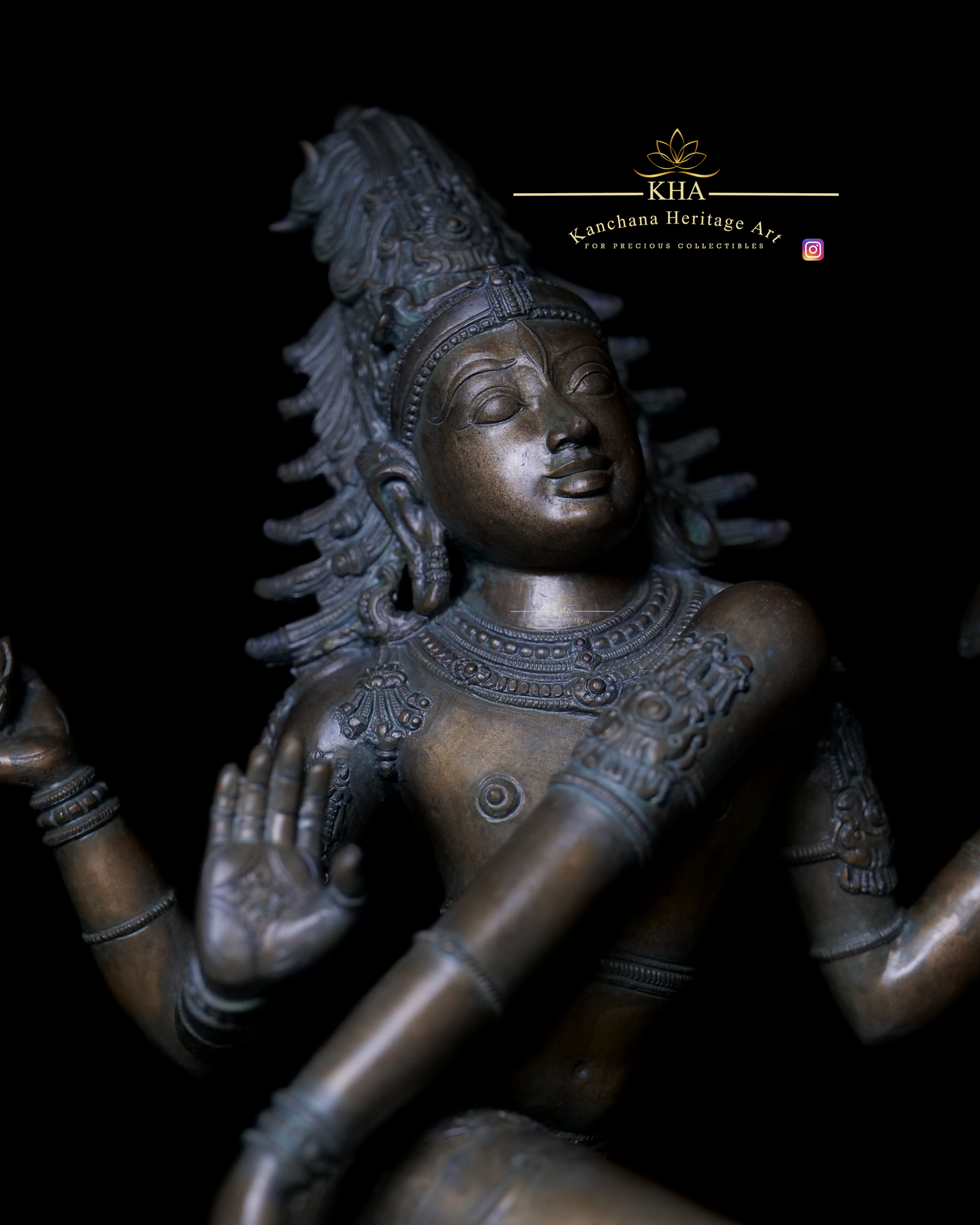

Madurai Natesa (Nataraja) Bronze Sculpture
This bronze Natesa (Nataraja) is inspired by a majestic 9th-century sculpture from the sacred city of Madurai, associated with the Early Pandya period, which is now housed in Govt. Egmore Museum. The original form is distinguished by its rare right-leg-raised posture, rooted in a cherished Madurai story from the Thiruvilayadal Puranam. The raised right leg holds deep meaning. According to the Thiruvilayadal Puranam, King Rajasekhara Pandya, a devoted follower of Shiva, felt that the Lord’s eternal dance upon one leg might be tiring. Moved by this devotion, Shiva changed his dancing leg—an episode known as “Kaal Maari Aadiya Patalam”. This gesture reflects Shiva’s compassion and responsiveness, making the Madurai form especially sacred and unique. Rendered here at an intimate 30-inch scale, this sculpture seeks to reflect the presence, dignity, and spiritual depth of the monumental original. The posture flows with quiet rhythm. The torso and limbs move in measured harmony, while the gently uplifted head and subtle upward tilt suggest awareness beyond motion. The expression remains calm and inward-looking—serene and composed even amidst cosmic activity. The jatamakuta rises with dignified restraint, its matted locks radiating softly with contained cosmic energy. The pedestal, shaped in reference to early documented examples, anchors the form with yali motifs, a very unique pattern base, not seen commonly in the bronze statues; The original Natesa was monumental in scale and spirit. This smaller bronze does not attempt replication, but rather to carry forward its essence—its stillness, rhythm, and inner vitality. Cast using the traditional lost-wax method and finished with a deep, aged patina, it stands as a quiet homage to the enduring Pandyan bronze tradition.


